Showing posts with label Steven Campbell. Show all posts

Thursday, June 18, 2020

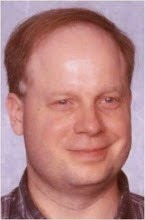
Return Interview featuring Urban Fantasy & SF Author Steven Campbell


Steven worked as a computer programmer for various Fortune 500 companies. He'd been repeatedly asked to move into management but always refused, not wanting to give up on writing. One day he got laid off and received a severance package, and decided to work full-time on his first novel.

Although Steven has been writing basically all of his life, that's when his writing career began to take off.


Steven,
Welcome back to Up Around the Corner!
(For those who are interested, here’s the link to Steven’s first interview: Interview with Author Steven Campbell, August 2014)


It has been almost six years since you spoke with us last. Since then, has your writing career in any way progressed as anticipated?

It’s great to be talking to you again. Partially because I got to look back at myself. Six years is practically two infinities in the publishing world. When I spoke with you the first time, self-publishing had been maybe a few steps past infancy. And it has changed significantly since then, which has also changed my career. I’ve managed to hang on being a fulltime writer. But if I hadn’t embraced audiobooks early and made a few other practical choices, I might not be able to say that. There are so many books out now, it’s extremely difficult to stay relevant or noticed. Back then, I don’t think I had much in the way of hopes or expectations other than to keep doing it. So far, I’ve been able. But it gets harder and harder every year. I tell my dog at least once a week to enjoy this while you can, because I might not be able to always work from home.


Most readers would know you from your Hard Luck Hank Series. For those that may not be familiar with it, could you share a little bit about the series, and its protagonist, Hank?

It’s kind of a pulp throwback. It blends science fiction, comedy, and kind of noir. Hank is a mutant heavy, who is a fixer, gang negotiator, and a detective on a corrupt space station. He is great at his job because he’s very difficult to hurt and has a likeable personality. Both attributes come in very useful amongst violent criminals.


You have recently kicked off a new project, an urban fantasy, Spell Talker, set in Los Angeles California. What five words might best describe Spell Talker?

Hmm, five words? Am I using them now? Woops!
Modern. Scientific. Fantasy. Los Angeles.


Okay, beyond those five words, what would you like us to know about Spell Talker? Like Hard Luck Hank was to science fiction, how is Spell Talker a little different than other urban fantasy tales out there?

I always liked fantasy and I probably got into it long before science fiction. But I grew away from it because it seemed to really hammer down its subgenres and leave little room for divergences. The sword and sorcery epics. The urban vampires. You often know what is going to happen. I also never really liked how magic was explained. Or not explained. Magic is generally just…magic. Even if it’s explained it doesn’t make much sense, because it’s magic. Okay, so it’s mana from dragon snot. What particles does that produce? On tackling this book, I wanted to make a system that was at least grounded in science. It took me a long time. Whether or not the effort was worth it, I can’t say. For most people it’s probably good enough to say, “magic—POOF.” But I just didn’t want to write that. It’s also a kind of modern journey around Los Angeles. I’ve been living here since 1994 and I wanted to have it set here instead of Elftopia or Sweden, since I haven’t been to either of those places. It’s not a love letter to Los Angeles; there’s plenty of lousy stuff here. But there’s a lot of character in this region and I realized I hadn’t used any of it in a book before.


When not writing, where do you enjoy spending time? What is one place that you would one day like to visit?

I definitely need to check out Sweden or Elftopia since I just made fun of them. I’ve been fortunate enough to live at the beach in Los Angeles. I’ve been here for something like 20 years at this point. I can honestly say I’m the ugliest and meanest person in my entire city of 1.4 square miles. There are days I go outside and it’s just absolutely perfect. No matter how grumpy I was, I have to smile and appreciate it. Like it or not, humans are profoundly affected by weather conditions. I loved snow as a kid, but it’s really fantastic being able to put on shorts and flip flops and be considered overdressed. As for travel, we’re still deep in the pandemic times around here. I’d like to visit anywhere and not be worried about infection. There’s only so much bread I can bake. Though that has been a very beneficial side-effect of quarantine. I’ve become a lot better at cooking. Pressure cooker. Get one!


Although an author can never hit a home run for all readers out there, what is the most inspirational, or memorable, thing a reader has said about your writing?

This may be crass or unthankful, but I don’t really pay much attention. Writers have to have unbelievably thick skin—at least about their writing. Because like you said, you can’t please everyone. My own personal take is that 95% of the world absolutely hates Shakespeare. Hates his writing. They force kids to read him at school and you’d be hard-pressed to find any children sprinting to class so they can get a head start. If Shakespeare is loathed by the planet, what chance have I got? So I’ve long since turned off most of my receptors to feedback that rise above volume level three. Which filters out the screaming and filters out the cheering. I’ve had people say that I helped them with some terrible illness they had, or even their approaching end-of-life. But I just don’t dwell on it. I lobotomized that part of me during my many, many years of editors and readers and buyers despising my work. I can’t turn it back on and bask in the small praise I get from time to time. If someone writes me and gushes, I generally respond and ignore the gush, answering any questions they had.


Before I ask the next question, I want to share something that I don’t’ consider ‘gush’J One of my favorite parts of your novels are the banter and arguments between Hank and his longtime (mad scientist) friend, Delovoa. My wife and daughter love them too.

So here’s the question: Your Hard Luck Hank Series has been narrated by Liam Owen. When writing, do you hear Hank’s voice in the voice Liam Owen created? If not, who would you say Hank sounds like? What about the other recurring characters?

I really enjoy writing banter. And, as most things, I believe that comes across. The things I don’t enjoy writing end up being lousy because I’m having a bad time creating it.

But I don’t really think of any voice. It’s not a slam at Liam Owen, he does a great job on the audiobooks. My brain simply doesn’t work like that. I think partially because I’m constantly fiddling with the dialogue. If I played it like an audio recording in my head, he would be stuttering and repeating the same lines a hundred times and I’d go insane. But it’s a good question. Hmm.

The way I write and go through scenes is more like a dream. Not a Hollywood dream, because that’s not how dreams work. If you relate a dream or remember a dream, you’ll be like, “Some guy picked up a huge guitar for some reason.” You don’t remember if he had red hair, or had on pants, or even if he had legs. You don’t remember if there was grass on the ground or if you were upside down. You see some concept of a “guy” and a “guitar.” But nothing else is filled in. It’s disembodied. It’s not like a real photo or movie or audio. It’s just snippets and fragments that our brain is smashing together. And later, we try and make some narrative out of it.

So that’s what I see/hear when mentally going through scenes I’m writing. It’s a telescopic lens that focuses on only a couple pieces and the rest is just blur that is only hinted at. The voices are probably pretty close to my usual inner voice. We rarely change our inner voice. Like pitch it higher or lower to simulate other genders. And when we do, our own throat modulates to create it, even though we aren’t talking out loud. Try it. That’s really exhausting after a while. So I just mumble along in my own inner voice.

But this is a good question to keep handy. I think we tend to answer it figuratively instead of literally.


What might readers expect from you in the next year or two?
(Click on the YouTube Video and listen to Hank on Belvaille answer)


Once again, Steven, thank you for taking the time to speak with us!

==============


Saturday, March 23, 2019

Hard Luck Hank: Dumber than Dead


I'm currently waiting for the audiobook release of Hard Luck Hank: Dumber than Dead. It's the 7th book in the Hard Luck Hank series. I find the mutant Hank's tales interesting and amusing. The author indicated that the audiobook recording is about two-thirds of the way finished.

Currently re-listening to the series. Through the first three. Dumber than Dead will probably be released before I get through the series to date, but that's okay.

For those who might be interested, here's an interview I did with Steven Campbell a few years back: Interview with Author Steven Campbell

Tuesday, August 19, 2014

Interview with Author Steven Campbell

`
Welcome to Up Around the Corner, Steven. Please, tell us a little about yourself and your writing.

Hi, thanks for the interest. I’m a writer living in Los Angeles. My current genre is science fiction/comedy with a bit of noir and comic book sensibilities thrown in. The series is called Hard Luck Hank with a new audio novel adaption being worked on along with the third novel in the series.

What sparked the idea for the character Hank and the universe you created, including Belvaille?

 I came up with the name Hard Luck Hank about 25 years ago when I wanted to submit some ideas to a Fishing magazine, of all places. The ideas were about a guy who had bad things happen to him whilst fishing. The editor liked the concept but apparently didn’t like the writing of a teenager.

As for Belvaille, I grew up in a city called Beltsville, MD, which is where I got the name. There was a forest I used to walk in about every day where I did a lot of daydreaming about stories.

I wanted to write science fiction but I wanted it to be about the characters, not about technology. Not about space ships. Star Trek is really about the Enterprise. That’s a great crew and all, but if you put them on the U.S.S. Hunk of Junk, no one would know them. Having people stranded on that city at the edge of the galaxy was a way to make individuals be important. A person can have a lot of influence in a small city. And of course, having the city so far away let it take on its own character.

You’ve self-published two Hard Luck Hank novels and two novellas, one about Hank and the other about Delovoa. What led you to self-publish and what (besides good writing) has led to success in attracting so many readers?

Self-publishing wasn’t really a conscious choice. When I was growing up it was still referred to as vanity publishing. i.e., you did it because a “real” publisher wouldn’t take you on. But the economics and industry changed a lot. To allow a book or series to be profitable for an agent and publishing company, it has to meet certain criteria, because there’s a lot of overhead. As a self-publisher, there’s just me and those I hire. And I’m cheap.

I pitched Hard Luck Hank to agents and publishers. I was politely refused and often told that science fiction and comedy don’t go together because sci-fi readers are serious. I finally said, that can’t be true, because I’m a lifelong fan and I enjoy it. So I took a chance and put it out myself.

I’m not entirely sure why Hank has done (relatively) well. When I put out the first book I had a goal of selling 50 copies. Total. Because that would mean I sold to people I didn’t personally know and guilt into buying it. I think the first month of publication it sold about 3,000 copies. Obviously that’s not Best Seller material but for someone who was shooting for 50, it was a pleasant surprise.

I believe its unusual genre(s) have helped. Every time I say it is science fiction/comedy, people ask if it’s like Hitchhiker’s Guide—which is a great series of course. But the fact there is only one massive series out there in that genre shows it’s not yet stale or crowded.

The cover art for your novels are pretty sharp. Can you share how they came about?

I’m a huge comic fan and huge visual arts fan. I’ve known quite a lot of traditional visual artists in my life and have a lot of respect for them. I wish I had more patience and skill for it, but it wasn’t ever something I personally enjoyed. I searched online for artists who had portfolios and a style that I thought could fit my goals. I wanted to make a deadpan parody of the high fantasy and sci-fi works I saw growing up. Kind of like Frank Frazetta and Heavy Metal Magazine. My original email descriptions would be about 4,000 words and would have a (very) rough drawing to show composition. From there, I’d guess each one had about 30 emails back and forth as progress continued over the months. That said, you have to know when to back off and let the artist do his job.

In terms of financials and contracts, all the art I buy is work-for-hire. I’m not entirely happy about this, because I believe in artist (and writer’s) rights. But because of the nature of how it was going to be put out and advertised and the fact I’m not a lawyer, I knew I couldn’t restrict people downloading the images and distributing them and doing whatever else. For instance, the covers pop up when you browse the books on Amazon for free. It was just simpler for all parties.

The hyper-realism of the first two novels led to a more cartoony third (in progress) novel and short stories. Part of it was tailoring the cost of the work to what I thought I could recoup from sales.

A little off topic. If you could sit down to lunch with any three people (living or deceased), who would they be, where would you dine, and what would you hope to talk about?
 
Benjamin Franklin. Mark Twain. I can say those two without hesitation. Franklin is the person I’d aspire to be. He was a genius. A great man. A great writer. A noble man. And I could learn what he really meant for our country and come back with a big “I Told You So.” Mark Twain is someone I could realistically relate to.  While Franklin is an aspiration, I’ll never be Franklin and would probably be miserable if I tried. I could be a Mark Twain if I didn’t always have to wear white and didn’t have to be so damn clever all the time. But I think I could just sit there laughing and learning at the feet of Twain.

For the third person, you have a tendency to say someone like Einstein. But I wouldn’t know what the hell he was talking about, so what’s the point? I’m not sure offhand who I would pick for the last one. I’d have to think on it for a while.

A number of citizens in the Colmarian Confederation have unusual mutations. Some are useful and others seemingly pointless. As an author, do you create the unique mutation first and then build the character around it, or do you create the character and then the mutation follows or as a priority, do you develop the mutations to fit the plotline?

Hank’s mutation was very purposeful. I like violence-as-humor. But not slapstick. There has to be drama in the violence. Fear of it. I wanted a character who got beat up but kept doggedly persevering. I respect that. The problem is, especially in a science fiction world, when people get shot, they tend to die. So it can only be funny once. I was either going to have to change the physics of the universe, make the technology less grand, or have a character who couldn’t easily be hurt. I chose the last two. While there are space ships and Portals and such, they use firearms like on earth. Hank is very much a product of his particular mutation.

The other mutations aren’t nearly as important. It’s a big galaxy and they have explored much of it. Whether someone is a mutant or a completely different species with different attributes doesn’t particularly matter. I think of it like earth. Some people have red hair and some people are seven feet tall. One attribute is going to have more impact in day-to-day life than the other (red hair, obviously).

Of the characters written, which mutation did you find the most challenging to incorporate in the storyline?

I’ve gotten used to Hank, but someone who can’t be hurt by normal means is a very odd concept. So much of what we do as humans is based on instinct and fear. He is a guy who could literally fall down every flight of stairs he came to because it’s simply faster than walking. I didn’t put in much of that because I think it gets old, but I thought it was a funny concept.

The villain in Basketful of Crap has a “mutation” that was very difficult to get my head around because it is contrary to nearly all life. I don’t want to spoiler it too much. They say those who don’t study history are doomed to repeat it, but history will repeat itself because humans are humans. We will repeat ourselves as long as we’re human regardless of whether you study history or not. You don’t have to live very long to notice the patterns.

Delovoa has changed the most. I stuck him in the novels as kind of a minor character because it’s a science fiction landscape and I couldn’t have Hank punch his way through tech problems. In the short stories, I really went wild and made him a sociopath. He’s probably my favorite character and it’s challenging to make someone so nutty be likeable.

Who are some of your favorite authors to read and what are some of your favorite movies/TV series? Have they influenced your writing and if so, how?

These are always hard questions and I was thinking about this yesterday. I’m not sure if I was “influenced” by something or I simply liked it because it fit my personality and tastes at that time. It’s rare that we finish a book, hold it up and proclaim, “Henceforth, I shall now emulate this style!” Some of the things I’ve liked and have repeatedly liked at different points in my life in no particular order: The Road Warrior movie; early Cerebus the Aardvark comic; Blade Runner movie; Lock, Stock, and Two Smoking Barrels movie; Raymond Chandler novels; Dashiell Hammett novels; Harry Potter novels; some Hemingway; Mark Twain nearly everything; Edgar Allan Poe; Dungeons and Dragons/Warhammer/Champions games; Pulp Fiction movie; Game of Thrones; Alan Moore comics; Miller’s Crossing movie; Amadeus movie, Family Guy and American Dad TV shows; Thin Man novel and movie.

Miller’s Crossing is based on Dashiell Hammett’s Red Harvest and Glass Key. You see a lot of Belvaille in these and Raymond Chandler’s insanely corrupt cities and societies. Of course, I also grew up around Washington, D.C.

What can readers look forward to in the next year or so?

I have a new novel, Prince of Suck, that I’m working on. I hope it will be released in the later part of 2014.

Where do you see yourself as an author seven years from now?

I used to joke that I was going to die crushed under the weight of all my unpublished writing. One day it was just going to shift and I’d get buried under piles of paper. Now at least I can store it all electronically. I really don’t have a clue. I don’t plan that far ahead. I like to roll with the punches and keep a lot of irons in the fire and use as many idioms as possible.

As we’re closing in on the end of the interview, is there anything you’d like to add or share with the readers here at Up Around the Corner?

This is for my fellow writers. When I came to L.A. I can’t tell you how many people said they were writers. This was the heyday of million dollar options and screenplays. I couldn’t be sure who was a “real” writer and who just wanted fame and money but was too ugly to be an actor. So I came up with a question:

If the future you visited from your death bed, tubes hanging off, 123 years old, stained hospital gown, and s/he said: “I’ve been sent back at the end of our life to tell you something. You will NEVER sell any writing. You will never be a success at it. You will never get anything except ridicule for your words. Do with this information what you will.” If you knew with certainty the future you was telling the truth and it was your destiny no matter what…would you still write?

If you would, you’re a writer. If you hesitate or panic, then you’re writing for the wrong reason(s). The world doesn’t need more bad writers and it’s easier to become a famous hula dancer than a famous writer.

Once you’re sure you’re a writer, recognize not everything will be a Best Seller. Write what you love. If you love Romantic Thrillers between cat and penguin protagonists, by all means write it. You’ll be happy. There is a market for nearly everything. It might be a small market, but if you write because you love it and/or you have to, then it doesn’t matter.

The same goes for what genres you read or watch and activities you enjoy. Like what you like regardless of what anyone thinks. It’s now cool to be a geek and enjoy dorky things, but for…a long time it wasn’t. But who cares? If you’re into trashy romance novels, then read ‘em. Only Mark Twain and Benjamin Franklin can judge our tastes and they’re both dead.

You can also get updates on my work and write me mail and opt-in on my website.

Thank you, Steven, for taking the time for the interview.

Thanks again for the interest.
`