Showing posts with label dark fantasy. Show all posts

Thursday, July 30, 2020

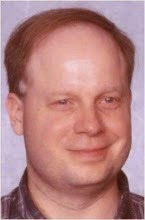
Return Interview featuring Fantasy & Horror Author C. Dean Andersson


Dean Andersson's novels and stories have been published by Harper Collins, Warner Books, Kensington, White Wolf, Crossroad Press, and Alpha-Kniga. He received a Bram Stoker finalist award from the Horror Writers Association for his Cemetery Dance story about a close encounter on a lonely highway with the Death Goddess Hel, "The Death Wagon Rolls On By."

Dean,
Welcome back to Up Around the Corner!
(For those who are interested, here’s the link to Dean’s first interview: First Interview with C. Dean Andersson)

It has been almost seven years since you last spoke with us. Since then, has your writing career progressed as anticipated?

Yes. I am happy with how it has progressed.


Through what book or series would readers most likely know you? For those who may not be familiar with it, could you share a little about the book (or series)?

I Am Dracula is my best known novel in the horror genre. It is Dracula’s Secret History told by Dracula himself. Crossroad Press recently published a new print edition and a first edition ebook.

Warrior Witch of Hel, Book 1 in the Hel Trilogy, is my best known novel in the fantasy genre. It is the sword and sorcery saga of a barbarian warrior woman named Bloodsong. Warrior Witch of Hel follows Bloodsong’s fight against a sadistic sorcerer to rescue her daughter. “Warrior Witch of Hel” is now also a song on the band Smoulder’s new album, Dream Quest Ends. The song does Bloodsong proud.


Here’s a little challenge: What five words might best describe I Am Dracula?

Lies, Love, Satan, Resurrection, Revenge.


Okay, beyond those five words, why do you think readers would be interested in I Am Dracula?

I read Bram Stokers novel, Dracula, for the first time when I was twelve. It fascinated and frightened me, but it left me wanting to know how and why Dracula became a Vampire. Years later, when I was writing, these words came to me: “I became a vampire for lies and for love. I remain one for revenge.” Those words spawned I Am Dracula, the story of a mortal man, a national hero, who becomes a Vampire King.

I know readers who re-read the novel each year. The intense relationship between Dracula and Tzigane, a Witch who falls in love with him, is a love story some treasure. Others tell me the book’s portrayal of evil made them question their beliefs. A reader from the historical Dracula’s homeland thanked me for showing the mortal Prince Vlad Dracula, as a warrior who protected his country and defeated invading hordes. All in all, bottom line, for many readers, I Am Dracula has a strong effect.


Your Hel Trilogy had a foreign translation. How did that happen, and what did you find interesting about the experience?

A Russian publisher, Alpha-Kniga, asked to publish the books. I had nothing to do with the translations. They did everything, and that is the most interesting thing, that it just happened. But unexpected things often happen with the Bloodsong books. For example, the song by Smoulder that I already mentioned. The Russian editions are hardbacks with wraparound cover art by Russian artist Ilya Voronin, and they are beautiful. I heard from Russian readers who enjoyed the books.     


When not writing, what do you enjoy doing? And what is a place that you would like to visit?

I enjoy astronomy. One night when I was rather young, I asked my dad to show me the Big Dipper in the night sky. An article on navigating by the stars in the back of a comic book claimed the Big Dipper pointed to the North Star, and that you could navigate by the North Star because unlike other stars, it never moved. So, dad showed me where to look, and sure enough, extending a line connecting the two stars at the dipper’s end pointed to the North Star. Eventually, I took classes in astronomy in college, and I now read Sky and Telescope magazine each month to keep up with the latest discoveries. Then too, now and then, just for fun, I use a small telescope of my own.

As for a place to visit, Scandinavia is first on my list. My Hel Trilogy takes place there, and I would like to see the land of the Vikings. 
 

You have been involved in this author gig for a number of years. What are three changes that you have observed over the years? Would you identify them as positive, neutral, or negative changes?

Changes in the methods available for writing, changes in the methods of research, and changes in the way books are published. If writers do not want to go the traditional route of finding a publisher, there are now resources such as Amazon available for self-publishing. And for me, computers, word processing software, and doing research online, at least as a starting point, are far superior to the typewriter on which I used to work and hours in libraries looking for the right research book. So I feel these changes are weighted heavily on the positive side of the scale.

But the most basic thing has not changed. A writer must still invest time and energy creating a story, and to the person doing the writing, the other things should matter as little as possible during the creative process. The story, setting, plot, and characters should be all important when creating a tale. Life goes on outside that creative bubble, but that bubble should be, as much as possible, like a force field repelling everything else, psychologically at least if not physically. Easier said than done, of course, but it is a goal.


What might readers expect from you next?

Nine of my novels are now available as ebooks because I spent over a year editing them, revising and rewriting as I felt was needed, then expanding some sections and writing new ones here and there to make them better books. Experience made me a better writer, and Crossroad Press provided the opportunity to revisit and improve my novels. I recommend the ebooks as ‘author’s cuts.’ The new printed edition of I Am Dracula is taken from its ebook edition, by the way. A reader recently told me she liked the new edition of I Am Dracula better than the original, which said to me that my work on the ebooks had been the right thing to do.  

But now I am concentrating on my works in progress again. There is a new Bloodsong novel I am anxious to finish, Valkyries of Hel, in which Bloodsong is transported by sorcery to a world similar to our modern one and must fight her way through strange dangers to get back to her own world. In the process, she befriends a group of endangered young women in a Korean Pop band and discovers unexpected connections between them and friends in her own world.

And I also want to finish I Am Dracula II: Dracula’s Witch. It is told from the Witch Tzigane’s viewpoint. She has been quite literally to Hell and back, and her account has revealed surprises I had never guessed. It’s fun when a good character takes over and surprises the writer.

Plus, I have a new novel of Horror in the works, something more akin to my Texas Horror Trilogy, which is contemporary horror, the trilogy being Torture Tomb, Raw Pain Max, and Fiend. Torture Tomb tells of a kidnapped young woman and a group of modern Witches who fight physical and supernatural evil to rescue her. Raw Pain Max is a tale of the infamous mass murderess, the Blood Countess, Elizabeth Bathory in the modern world. And Fiend follows events at a comic book convention when an ancient Witch, Medea from Greek Myths, attends the convention to stop a serial killer of children. The myths say Medea killed her own children, but it turns out she was framed and has been searching down through the centuries for the real killer. In the process, Medea has become a protector and avenger of abused or murdered children.


As we’re closing in on the end of this interview, is there anything you want to add or share with the readers?

I have been told by readers that my novels are fun to read, which is one of the reasons I write, to entertain myself and my readers. I can’t help it. Thanks to my stage Mom, I grew up from age three performing before audiences, following the old showbiz rule, give the people what they want. Readers are my audience now. But I never know how what I write will affect them.

When film director Amy Hesketh placed a copy of I Am Dracula on the Vampire’s dressing table in her vampire film, Olalla, she told me it was because she read the book when a young girl, and its effect stayed with her.

Another innovative film director, Jac Avila, made Maleficarum, the scariest, most realistic and relentless horror film about the Inquisition I have seen. Jac has become a friend and once told me that my novel, Torture Tomb, was a favorite.

Other readers struggling against odds that seem overwhelming in their lives have taken heart from my warrior woman Bloodsong’s fight to save her daughter and protect her people. With Bloodsong, surrender is never an option. She keeps fighting, no matter how hard or long it takes, until she finds a way to win.

So the time I spend writing has produced positive effects, and reactions from readers encourages me to keep writing. To readers I therefore say thank you. I will continue to tell stories. And the show will go on.  

Once again, Dean, thank you for taking the time to speak with us.

You’re very welcome. It was a pleasure.

Below are Links were you can find C. Dean Andersson online and learn more about his novels:

Website— www.cdeanandersson.com


Tuesday, June 9, 2020

Interview with author Joshua E. B. Smith


Welcome to Up Around the Corner, Joshua. Could you tell us a little about yourself and your writing?
Hiya! First, let me say thank you for the chance to be featured on your site. I sincerely appreciate it, and will be happy to return the favor soon.

As far as myself, I am an independent author from Vienna, WV (which is effectively a suburb of Parkersburg WV – and I promise, it’s okay if you’ve never heard of it). I’ve been published for almost five years now, though it’s only been in the last couple that I’ve been taking it seriously.

I am the author of the dark fantasy/fantasy horror series, The Saga of the Dead Men Walking. My genre is a little hard to define, in truth. Most of the time when people think ‘dark fantasy,’ the thought goes to romantic paranormal or things of that nature. Up to this point in my series, there’s no real romance. Mostly, it’s just a tour of violence and monsters set in a Game of Thrones/The Elder Scrolls-esque fantasy world.

I currently have four novels published in the Saga of the Dead Men Walking, along with three novellas, and two more novels (and novellas) in the pipeline, including the well-reviewed Snowflakes in Summer and my newest release, Insanity’s Respite.


Can you share a little bit with us about your most recently published work?
I just launched (on June the 6th!) a full-length novel, Saga of the Dead Men Walking: Insanity’s Respite, which starts a new chapter in the Saga. The main character – an exorcist from the Order of Love – has been sent to Medias Manor, an asylum for the battered and broken with magical aptitude. His last adventure left him with a broken leg, a perforated arm, and a bad case of post-traumatic-stress disorder. The problem is, while he’s at the so-called ‘Safest Place in the Kingdom,’ a series of murders has recently come to light while a wedding rages (yes, that’s the right word) in the background.

Now he’s in a race to figure out what’s going on while battling the demons in his mind. The question, ultimately, is if the demons in his head are real, or if the only monster in the city is the one hunting the Queen’s citizens outside of the Manor walls.


What inspired you to become a writer, and what is one of the things that surprised you most in the process?
It’s hard to say what inspired me to become a writer. I’ve just always loved to tell stories. For a big chunk of my teenage years, I used to play “Massively Multiplayer Online RPGs” or MMORPG’s for short. These were computer games with a fantasy bent to them that had you going out and slaying dragons and ghouls and the like with sometimes dozens of other players in a virtual world.

When I hit my early twenties, my life changed a bit and I lost the time to log on and play day to day. But, I still had the characters I used to play in my head – and once I realized I could start putting them to paper, I realized what I wanted to do with my life.

As far as what surprised me the most in the process? The fact that writing a book isn’t just about writing a book. If all it took to write a book was to sit down, pull up my keyboard, and just write, I could have a new book every couple of months.

But as an indie author, writing your story – the thing that you are basing your entire business around, your product, your goal, the part that your clients consume and base their opinion off of – is only about thirty percent of the time. If that. The rest of the time is spent marketing. It’s spent designing covers, it’s spent formatting files, it’s spent researching advertising on Amazon and Facebook. It’s spent composing newsletters and trying to generate interactions on social media.

As absolutely crazy as it sounds, as an author, I miss writing. I look at the days when I can say, “Okay, I have just finished getting five ads up and running, I’ve scheduled another three or four FB posts, I’ve done a video, I’ve reached out to local support groups, I can actually write now,” as my days off. The writing is the easy part. The marketing?

That’s another story entirely.


What is one of the most challenging or difficult lessons you’ve learned as an author?
You get told going into it that most authors don’t make above poverty-line level incomes. There’s been numerous studies that have shown this across the board. The difference is between knowing it
and then filing your income on your 1099-MISC form. So, take that, and you take a lesson in humility at the same time because you are going to run into other authors who are making two, three, or even ten thousand dollars a month – they may not be better than you as an author (subjectively or even critically speaking), but they’ve found the critical lines of advertising and marketing that work for them in ways to maximize their income levels.

It’s really, really easy to get stuck in the mindset of, “Why are they doing better and I’m not?” when you need to be focusing on the mindset of, “My work speaks for itself, I just need to get more of it out there and be seen.” That’s a lot harder than it sounds and I honestly struggle with it every single day.

It’s motivation, but at the same time, it’s a hard fight in your head. Not going to lie to you either; some days, I don’t win that battle.

Name one of your novels and list five words that best describe it.
Snowflakes in Summer: Book 1 of the Snowflakes Trilogy. Wraiths, demon dogs, winter, and bad decisions.

What’s one novel that you’ve read and enjoyed, and has stayed with you? Why do you believe it has?
It’s kinda odd, but Dante’s Inferno. It is, to this day, the only poetry I’ve been able to pick up and stand to read. When I was a teen, I’d read it a few times a year. I was born and raised in a very religious family, but as a kid (and even as an adult), I’ve struggled with the concept of ‘Heaven.’ Hell, on the other hand, was easy. Revelation was my favorite chapter in the Bible, but I found it to be… lacking and light on the details, for lack of better words. The Inferno had such great visualizations that I felt like I was there and at the same time, it was such a great introduction to horror in literature that it’s hung with me and strongly influenced my writing style.

When not writing, what fun or interesting keeps you busy?


I cosplay for charity purposes with the Ghostbusters – West Virginia Division. They are a fundraising group that supports both the American Heart Association and the Children’s Home Society of WV, which is an agency that provides support for foster children and helps them find families in WV. It helps me balance out my life – I go from writing scenes of horror, misery and gore to going out and entertaining kids and showing them that you don’t have to be afraid of what goes bump in the night.

What can readers expect from you in the future?
More. A lot more. I don’t have plans to shift genres anytime soon, so I hope to stay in the realm of fantasy/dark fantasy/horror. Insanity’s Respite is the start of a new trilogy (maybe a four book series) and I am giving myself an ambitious (probably way too ambitious) publishing schedule for the next two books in it. About twelve years ago I wrote a mammoth, unformatted, five-hundred-plus page novel that I never finished. That it exists is an albatross around my neck for more than a decade. If I were to stick it in appropriate 6x9 formatting right now, it would likely exceed more than twelve hundred pages…

...but I can’t get back to it until after the current series comes to a close. And I really, really want to get to it.

You can also expect more from me on my Facebook and website. I am giving considerable thought to starting a writer’s blog/interview page of sorts (because I don’t have enough to do already – HAH!) to both give other authors and creators I know exposure and to serve as a platform to drive my own marketing plans into the future.

What are your short and long term writing goals?
You actually asked me this outside of the interview, but I wanted to fit my answer in here. Short term, it’s unlocking a positive net income with marketing. Marketing is the one thing I struggle with more than anything else in the world. Over the last few years, I’ve put in a few hundred dollars here and there with one marketing plan or another with nothing really to show for my efforts.

That said, the last two months, I’ve been taking multiple marketing classes and courses. I’m working (hard) on getting that right formula of keywords and ad copy and blurbs to start turning a profit. Right now, it won’t matter if my profit attributable to advertising is only a buck fifty; that’s a buck and a half more than I had. It’s also a sign that I can start scaling up. I earn that first five dollars? I promise, I’ll turn it around and turn it into fifty.

Long term goals, more books. “Nothing sells your last book like your next book,” - Craig Martell, author, and admin of 20BooksTo50k, an online marketing group. The more stock you have, the better your odds of being seen, the better your odds of turning potential readers into mega fans, and every book you write will theoretically earn royalties in perpetuity. I made a couple of dollars last week over two books I wrote five years ago – and while it’s not much, it’s a couple cups of tea at McDonald’s.

Talk of money aside (those are more ‘business’ goals than ‘writing’ goals), my short term is a successful launch of Insanity’s Respite and to really work on my fanbase. I love it when I know that someone who has read my work before picks up one of my books and is able to escape from this chaotic world we live in for a few hours to get away from it. I love being able to provide that kind of relief. I love being able to make someone feel when they grab a copy of the Saga.

I want to make more people happy.

If I can do that, the rest of it falls into place.

As this interview is coming to a close, is there anything else you’d like to add or share?
A few months ago, I heard a couple of the most inspirational quotes about writing. I like to mention it whenever I see someone hurting or frustrated, and it applies to more than just books – it applies to creating anything. Be it a song, be it a drawing, be it jewelry, be it cosplay, you can apply both of these quotes. I wish I could take credit for them, but I can at least pass them on.

“You can’t edit a blank page,” and, “The only person that can tell your story is you.”

Of course, there’s also my line – and this one I can claim:

“You are the God of your own world. Create accordingly.”

If you have a story inside you, get it out. Don’t worry about making it perfect. That’s what copy and line editors are for. Don’t worry about making it cohesive at the start. You’ll figure out where the pages go and you’ll find readers who have faith in you to help you make it better when you can’t.

And, ultimately, whatever story you write – you are the writer. You are the creator, you are the maker, you set the rules, you set the tone, you set the conflict and the rewards. You define the sins and you expound the virtues. You’re responsible for the dirt on every page, the souls in every character, and the air that they breathe.

Writing (or creating art in general) gives you more control over anything you have ever and will ever have in your life. Take advantage of it and do whatever you want, however you want, and don’t confine yourself to normal. Consider writing to market, of course, but normal? You’re an author. You gave up normal when you picked up a pen for the first time.

Below, please list the places readers can find out more about Joshua Akaran Smith and his works:

Want to learn more about the Saga? Ready to enter a fantasy world of blood, guts, tears, and gore where good things happen to bad people, and the good people are questionable... at best?

Use any of the links below!


Signed paperback copies are available, too! Just send me a PM and I'm happy to get one in the mail for you!

ALSO!
The Dead Men Emailing newsletter is now live! To sign up and receive information about upcoming events, conventions, the charity work I do, characters in the series, new releases, sales, and the occasional freebie (plus behind-the-scenes business information), hop to the link below and drop your email today!

http://www.sagadmw.com/email

And lastly, thank you to Terry Ervin for having me today! It’s been an absolute pleasure!
~Joshua E. B. Smith

Tuesday, December 22, 2015

Guest Post: Writing Dark Fantasy by Cas Peace


When I began writing my Artesans of Albia series, I had no idea which fantasy genre would apply. Once all nine books were finished it was clear the main genre would be Epic Fantasy, with Sword and Sorcery and probably Heroic Fantasy as lesser categories. However, the final trilogy of the series can most certainly be classed as Dark Fantasy, and this came as quite a shock to me, even while I wrote it.


Fans of the series will know there are elements of dark fantasy throughout the six books published so far. My main female character, Sullyan, suffers rape in the first trilogy, and this terrible experience colors her life and drives her to defend and protect those weaker than herself. Her determination to survive, or at least find some meaning for what life she has left, is what enables her to work toward the destruction of her tormentor and eventually face him in person. Strength gained through adversity is a theme running through all nine books, and it applies not just to Sullyan but other characters as well.


When I came to write this third trilogy, Master of Malice, it quickly became apparent that the mood would change. My antagonist, Reen, has been horribly, terribly disfigured by an incident on his island prison, an experience that changes him fundamentally. Someone as pious as Reen might be expected to see his survival as a reason for thankfulness, maybe a sign he should forgive his enemies and learn to live in contentment. But Reen chooses to believe he has been empowered by his God to wreak a terrible vengeance, and this he sets out to do.


Given his nature and the nature of the vengeance he seeks, it was necessary for me to delve into the darkness of my own psyche in order to write authentic scenes. I expected this to be difficult but it was actually—and worryingly—easy. I guess we all have darkness in our souls, the potential for evil, and once I gave myself permission to explore it, it flowed onto the page with disturbing ease. 


I have always believed an author must have experienced emotional highs and lows in order to convey such emotions on paper. How can you write scenes of trauma and depression if you have never felt such emotions yourself? It is possible to gain insights from other people’s reactions to terrible events, but I would find it difficult to convey real depth and realism without having gone through such things myself. It is rare for a person to go through life untouched by disaster, death, loss, or rage, but it can also be hard reliving them. I have to say that I found the act of projecting my darkness onto a character to be cathartic; it gave me a greater understanding of how my emotions worked and how I could express them without damaging myself. I hope I have succeeded in writing Dark Fantasy, and that readers will feel my characters’ emotions as deeply as I did. 

----
Cas Peace

Author of the Artsans of Albia fantasy novels:
Artesans of Albia:
King's Envoy -- King's Champion -- King's Artesan

Circle of Conspiracy:
The Challenge
-- The Circle -- Full Circle

The Master of Malice:
The Scarecrow
(new release)

Author Website: www.caspeace.com
Author Amazon Page: Cas Peace on Amazon