Showing posts with label C Dean Andersson. Show all posts

Monday, July 26, 2021

The Passing of C Dean Andersson (Asa Drake)


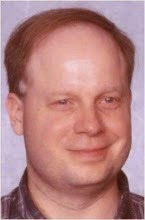
I recently learned of the passing of C. Dean Andersson.

I am truly saddened. Dean really helped my writing get a boost with his blurb of Flank Hawk. We communicated off and on over the years and I really enjoyed (among other things) the sharing of his interactions and anecdotal stories with some of the big name authors in the 1980s and early 1990s.

I had the opportunity to interview him twice for this blog:
Interview with Fantasy & Horror Writer C Dean Andersson (2013)
Return Interview with Fantasy & Horror Writer C Dean Andersson (2020)

Many years ago I came across his Bloodsong Series through the recommendation of a bookseller at a convention. 


The Bloodsong Series really caught my imagination. 

When Flank Hawk had been accepted by Gryphonwood Press, Dean was one of the authors I contacted, to see if he would read my novel and, if he enjoyed it, would offer a blurb for the book. Obviously, he replied and enjoyed my debut novel enough to put his name behind it.

Dean remained kind and supportive over the years as we talked about writing and the changing landscape of being an author, and more.

I know I will miss him, and I only knew him in a small way. Certainly those who loved and knew him better will miss his presence in their lives far, far more.

Here is a link where you can learn more about C Dean Andersson and his passing:
Rest in Peace Dean Andersson (at Realms of Night)

Here is C Dean Andersson's website:
C. Dean Andersson Fantasy and Horror

Wikipedia Page:
C. Dean Andersson

C Dean Andersson's Amazon Page:
C Dean Andersson (on Amazon) where you can find access to all of his works, fantasy and horror. If you already haven't, consider picking up one or more of his works, if any pique your interest. As an author Dean's goal had been to share tales readers would enjoy, and I know he'd love for his works to continue doing just that.


Thursday, July 30, 2020

Return Interview featuring Fantasy & Horror Author C. Dean Andersson


Dean Andersson's novels and stories have been published by Harper Collins, Warner Books, Kensington, White Wolf, Crossroad Press, and Alpha-Kniga. He received a Bram Stoker finalist award from the Horror Writers Association for his Cemetery Dance story about a close encounter on a lonely highway with the Death Goddess Hel, "The Death Wagon Rolls On By."

Dean,
Welcome back to Up Around the Corner!
(For those who are interested, here’s the link to Dean’s first interview: First Interview with C. Dean Andersson)

It has been almost seven years since you last spoke with us. Since then, has your writing career progressed as anticipated?

Yes. I am happy with how it has progressed.


Through what book or series would readers most likely know you? For those who may not be familiar with it, could you share a little about the book (or series)?

I Am Dracula is my best known novel in the horror genre. It is Dracula’s Secret History told by Dracula himself. Crossroad Press recently published a new print edition and a first edition ebook.

Warrior Witch of Hel, Book 1 in the Hel Trilogy, is my best known novel in the fantasy genre. It is the sword and sorcery saga of a barbarian warrior woman named Bloodsong. Warrior Witch of Hel follows Bloodsong’s fight against a sadistic sorcerer to rescue her daughter. “Warrior Witch of Hel” is now also a song on the band Smoulder’s new album, Dream Quest Ends. The song does Bloodsong proud.


Here’s a little challenge: What five words might best describe I Am Dracula?

Lies, Love, Satan, Resurrection, Revenge.


Okay, beyond those five words, why do you think readers would be interested in I Am Dracula?

I read Bram Stokers novel, Dracula, for the first time when I was twelve. It fascinated and frightened me, but it left me wanting to know how and why Dracula became a Vampire. Years later, when I was writing, these words came to me: “I became a vampire for lies and for love. I remain one for revenge.” Those words spawned I Am Dracula, the story of a mortal man, a national hero, who becomes a Vampire King.

I know readers who re-read the novel each year. The intense relationship between Dracula and Tzigane, a Witch who falls in love with him, is a love story some treasure. Others tell me the book’s portrayal of evil made them question their beliefs. A reader from the historical Dracula’s homeland thanked me for showing the mortal Prince Vlad Dracula, as a warrior who protected his country and defeated invading hordes. All in all, bottom line, for many readers, I Am Dracula has a strong effect.


Your Hel Trilogy had a foreign translation. How did that happen, and what did you find interesting about the experience?

A Russian publisher, Alpha-Kniga, asked to publish the books. I had nothing to do with the translations. They did everything, and that is the most interesting thing, that it just happened. But unexpected things often happen with the Bloodsong books. For example, the song by Smoulder that I already mentioned. The Russian editions are hardbacks with wraparound cover art by Russian artist Ilya Voronin, and they are beautiful. I heard from Russian readers who enjoyed the books.     


When not writing, what do you enjoy doing? And what is a place that you would like to visit?

I enjoy astronomy. One night when I was rather young, I asked my dad to show me the Big Dipper in the night sky. An article on navigating by the stars in the back of a comic book claimed the Big Dipper pointed to the North Star, and that you could navigate by the North Star because unlike other stars, it never moved. So, dad showed me where to look, and sure enough, extending a line connecting the two stars at the dipper’s end pointed to the North Star. Eventually, I took classes in astronomy in college, and I now read Sky and Telescope magazine each month to keep up with the latest discoveries. Then too, now and then, just for fun, I use a small telescope of my own.

As for a place to visit, Scandinavia is first on my list. My Hel Trilogy takes place there, and I would like to see the land of the Vikings. 
 

You have been involved in this author gig for a number of years. What are three changes that you have observed over the years? Would you identify them as positive, neutral, or negative changes?

Changes in the methods available for writing, changes in the methods of research, and changes in the way books are published. If writers do not want to go the traditional route of finding a publisher, there are now resources such as Amazon available for self-publishing. And for me, computers, word processing software, and doing research online, at least as a starting point, are far superior to the typewriter on which I used to work and hours in libraries looking for the right research book. So I feel these changes are weighted heavily on the positive side of the scale.

But the most basic thing has not changed. A writer must still invest time and energy creating a story, and to the person doing the writing, the other things should matter as little as possible during the creative process. The story, setting, plot, and characters should be all important when creating a tale. Life goes on outside that creative bubble, but that bubble should be, as much as possible, like a force field repelling everything else, psychologically at least if not physically. Easier said than done, of course, but it is a goal.


What might readers expect from you next?

Nine of my novels are now available as ebooks because I spent over a year editing them, revising and rewriting as I felt was needed, then expanding some sections and writing new ones here and there to make them better books. Experience made me a better writer, and Crossroad Press provided the opportunity to revisit and improve my novels. I recommend the ebooks as ‘author’s cuts.’ The new printed edition of I Am Dracula is taken from its ebook edition, by the way. A reader recently told me she liked the new edition of I Am Dracula better than the original, which said to me that my work on the ebooks had been the right thing to do.  

But now I am concentrating on my works in progress again. There is a new Bloodsong novel I am anxious to finish, Valkyries of Hel, in which Bloodsong is transported by sorcery to a world similar to our modern one and must fight her way through strange dangers to get back to her own world. In the process, she befriends a group of endangered young women in a Korean Pop band and discovers unexpected connections between them and friends in her own world.

And I also want to finish I Am Dracula II: Dracula’s Witch. It is told from the Witch Tzigane’s viewpoint. She has been quite literally to Hell and back, and her account has revealed surprises I had never guessed. It’s fun when a good character takes over and surprises the writer.

Plus, I have a new novel of Horror in the works, something more akin to my Texas Horror Trilogy, which is contemporary horror, the trilogy being Torture Tomb, Raw Pain Max, and Fiend. Torture Tomb tells of a kidnapped young woman and a group of modern Witches who fight physical and supernatural evil to rescue her. Raw Pain Max is a tale of the infamous mass murderess, the Blood Countess, Elizabeth Bathory in the modern world. And Fiend follows events at a comic book convention when an ancient Witch, Medea from Greek Myths, attends the convention to stop a serial killer of children. The myths say Medea killed her own children, but it turns out she was framed and has been searching down through the centuries for the real killer. In the process, Medea has become a protector and avenger of abused or murdered children.


As we’re closing in on the end of this interview, is there anything you want to add or share with the readers?

I have been told by readers that my novels are fun to read, which is one of the reasons I write, to entertain myself and my readers. I can’t help it. Thanks to my stage Mom, I grew up from age three performing before audiences, following the old showbiz rule, give the people what they want. Readers are my audience now. But I never know how what I write will affect them.

When film director Amy Hesketh placed a copy of I Am Dracula on the Vampire’s dressing table in her vampire film, Olalla, she told me it was because she read the book when a young girl, and its effect stayed with her.

Another innovative film director, Jac Avila, made Maleficarum, the scariest, most realistic and relentless horror film about the Inquisition I have seen. Jac has become a friend and once told me that my novel, Torture Tomb, was a favorite.

Other readers struggling against odds that seem overwhelming in their lives have taken heart from my warrior woman Bloodsong’s fight to save her daughter and protect her people. With Bloodsong, surrender is never an option. She keeps fighting, no matter how hard or long it takes, until she finds a way to win.

So the time I spend writing has produced positive effects, and reactions from readers encourages me to keep writing. To readers I therefore say thank you. I will continue to tell stories. And the show will go on.  

Once again, Dean, thank you for taking the time to speak with us.

You’re very welcome. It was a pleasure.

Below are Links were you can find C. Dean Andersson online and learn more about his novels:

Website— www.cdeanandersson.com


Monday, December 30, 2013

SF Signal: Three Recent References

`
SF Signal (A Speculative Fiction Fanzine) recently referenced Up Around the Corner twice and one of my novels as a "Book Received" thanks to my publisher, Gryphonwood Press.

1. Interviews with Scott Poe (Indie Book Blog)

2. Relic Tech as a Book Received (Relic Tech)

3. Interview with C. Dean Andersson (BloodSong Hel x 3)

Pretty neat.

If you click on over, SF Signal has a lot of news, reviews, articles and information going on.

http://www.sfsignal.com/

`

Saturday, December 21, 2013

Interview with Fantasy & Horror Writer C. Dean Andersson

`
Welcome to Up Around the Corner, Dean. Please, tell us a little about yourself and your writing.

While I was in the Air Force, I got serious about my writing. I wanted to write “good science fiction like Arthur C. Clarke.” His Childhood’s End, Rendezvous with Rama, and 2001 were favorite SF novels of mine. The cosmic wonder they produced I hoped to create myself.

After my discharge, I went back to school and studied physics-astronomy to get a solid science background for writing serious SF. I wrote short stories and sent them to Analog, my favorite SF magazine. But nothing sold.

It took some good suggestions from Analog’s then editor, Ben Bova, for me to admit the problem was that I was writing from my head. My stories had no heart. So, I tried writing from my heart and, because of an Old Woman in Black from my childhood, “spooky stuff” came out that sold.

I was playing alone, as only children learn to do, outside one day, I guess I was three or four, when I saw a woman in black, dressed fancy as if for church, hat and gloves, but old fashioned, like in photos my grandparents showed. She came toward me hunched over, using a cane. A black veil hid her face. And I got scared.

No one else was in sight there on the outskirts of my small, rural Kansas town. I ran, hid, and listened for her scuffling footsteps to go on by. But instead, they stopped. I waited. The quiet continued. Finally, I looked out. No one was there. 

Next time, she was sitting in a pew at church. I tried to run away but was forced to walk by her. Back home, I asked who she was. No one had seen her but me. Then my grandma remembered a widow who’d dressed that way, in mourning, before she died.

One night, after I’d started school, I dreamed I heard rustling outside my bedroom window and looked out. The Old Woman was there, unveiled and grinning. I woke up in terror. But worse, after that, usually near sunset and always when I was alone, I’d hear the rustling while awake.

I told myself it was “dogs walking in dead leaves.” But the sound came even when no dead leaves were there, and because of the dream, I was afraid to look.

The rustling continued, unpredictably, for a couple more years, until one sunset the sound came and sudden anger overrode my fear. I grabbed a baseball bat and ran outside to confront whatever it was. Nothing was there.

The sound never returned, but one night later on I awoke and saw my mother sitting in the living room, grinning in the dark. In the morning, I knew it had not been my mother. I hoped I’d been dreaming. But it felt like the Old Woman had been inside the house. After that, I never saw her again. I did, however, dedicate my novel, Fiend, to her with these words:

For the Crone of my Childhood Dreams,
At my North Window beneath the Willow,
Grinning in Moonlight with Her Hounds and Nightmares,
Feet of Bone rustling Dead Leaves in Summer
Beneath Her Cold Black Cloak,
My Thanks, and this Book.

Of course I have wondered about those strange childhood experiences. Were they caused by my strong imagination subconsciously playing with Jungian archetypes? And if so, why? Or was one or more unexplained phenomena involved? There are many reports worldwide of people awakening to see an Old Woman or “Hag” in their bedroom. But my encounters while awake  were different from those sleep-related, “Night Fear” experiences.

Whatever my Muse was, wasn’t, or still is, in retrospect I see that the consequences pervade my work, in particular with regard to strong female characters and Witches. Sometimes, I know while writing when my Muse is responsible. In Buried Screams, a rustling sound is associated with a visit from one character’s mother’s corpse. But more often, the “Old Woman” sneaks up on me to be identified later.

For example, the “Witch” themes in most of my novels were ripple effects of research into Witches begun in childhood, because I wondered for a while if the Old Woman was one. Fiend involves the immortal Witch Medea visiting a Dallas comic book convention. And my Medea is still, as in the classic myths, a Priestess of the Goddess Hecate, one of Whose triple aspects is the “Crone” or Old Woman.

Both I Am Dracula and I Am Frankenstein have a Witch who voluntarily becomes a Vampire to initiate Dracula into Vampiredom. Tzigane is a strong, heroic character who becomes Dracula’s lover. When Satan betrays them and transports Tzigane to Hell, so great is Dracula’s love for her that he fights both Satan and God to get her back.

Raw Pain Max came from discovering the historical Blood Countess, Erzebet Bathory, in a book called Witchcraft by William Seabrook when I was a child. Much later, as a horror writer I wondered what would happen if a modern woman who was into fantasies about Bondage and S&M, and wondered why, discovered she was the reincarnation of Erzebet, whose legend says she tortured young women and bathed in their blood.

Torture Tomb’s Witch-theme was driven by research into the Wiccan religion and studying history’s Witchcraft persecutions. In TT, modern Wiccans or “Witches” are the heroes, but reviewers almost always ignore that aspect to focus on the book’s explicit descriptions of the historically accurate tortures of the misogynistic “Holy” Inquisition. Showing in-your-face-so-you-can’t-keep-ignoring-it historical violence against women was, however, the point. The Old Woman in Black hates hypocrisy and takes no prisoners.

The Bloodsong Saga, on the other hand,  grew from my Scandinavian roots. Dad hailed from Sweden. Bloodsong is a kick-ass woman warrior/werebeast fighting to save her daughter and folk from sorcerers, death slaves, and other dark delights. But at the saga’s heart, disguised as Hel, Norse Goddess of the Forgotten Dead, is my Old Woman in Black.

Hel also appears in the short story that sent me to the Bram Stoker Award finals, “The Death Wagon Rolls on By.” And a character with Scandinavian heritage in Buried Screams talks of “Old Hel.”  

That’s an interesting overview and quite a career this far!

Can you tell us a little more about how you came to re-release your Bloodsong Saga and why you originally published it under a pen name?
 
Tight deadlines hurried the writing of Bloodsong’s saga. Converting the trilogy to the new HEL X 3 eBook gave me a chance to revise and expand the novels, even add chapters. To me, the trilogy was always one story in three parts, so it’s good to have it whole in HEL X 3, which I therefore consider the saga’s definitive edition.  

By the way, I only recently realized that because Bloodsong’s daughter is 6 in Warrior Witch of Hel, 13 in Death Riders of Hel, and 15 in Werebeasts of He, the saga spans 9 years. The number 9 is a sacred number in Norse lore. Writers often write things that mean more than they realized.  

About the pen name—nothing mysterious. Two previous dark fantasy novels had been written under the pen name of “Asa Drake,” Crimson Kisses and The Lair of Ancient Dreams. The publisher of the saga insisted we continue using that name. I changed it to my real name, later, and am, of course, using my own name for HEL X 3.

In your writing career thus far, you must have met some really memorable people (authors, editors, fans, etc.). Could you relate to us one or two of those experiences? Is there anybody today that you’d really enjoy crossing paths with?

Because of Bloodsong, Quorthon, founder of Bathory, the Swedish rock group that invented Viking Metal dedicated a song on Hammerheart to me, “One Rode to Asa Bay.” I was and remain honored. “Asa Bay” turned out to be Bathory’s only music video, because Valhalla needed Quorthon and took him early. But his epic music and video are immortal. Check them out on the Internet, and forever, “Hail the Bathory Hordes!”


My writing also connected me with one of my favorite artists, Boris Vallejo. A trailblazer, he painted my strong warrior woman using a body builder as the model before it was fashionable for women to show muscles. He even called me while painting Bloodsong to get things right. The Boris cover for HEL X 3 shows Bloodsong and Guthrun, her daughter, fighting enemies together. The beauty of strength, that’s Boris.     

And Bloodsong also put me on a World SF Con panel with a childhood writer-hero, Poul Anderson. His Norse Fantasy work, especially The Broken Sword, Hrolf Kraki’s Saga, and to me his masterpiece, War of the Gods, are inspired. What a thrill it was to meet him. Thank you, Bloodsong!
 
I even managed to correspond with the writer who made me want to write “good science fiction,” Arthur C. Clarke, before he died. Raw Pain Max has characters that listen to the original satellite radio station with an all metal format, Z-ROCK. Since I knew Clarke was credited with “inventing” the concept of communication satellites, I sent a newspaper article to him about the first Satellite Music Network. He responded, saying he’d wondered when satellites would be exploited for entertainment purposes and thanked me for letting him know.

But the person I would still like to meet? Maybe the one I’d most like to meet, face to face, is not even a person. Of course I mean my Old Woman in Black. Or maybe I’ve already met her, by writing the “spooky stories” she inspired.

Do you have any advice for writers trying to break in or early in their career?

Write from the heart, and write because you want to write, not because you want to be seen as having written. And become a merciless self-editor. Elmore Leonard said if your writing sounds like writing, rewrite it. If that sounds mysterious, read some Leonard. He practiced what he preached. The way he handled dialogue and characterization is amazing. Also, if at some point your work is not condemned by a critic whose opinion you are supposed to respect, work harder.

Can you share with us what we might expect to see from you in the near future?

A new Bloodsong novel, Valkyries of Hel, eBooks of my other novels, and the continuing adventures of Dracula and Tzigane, but also, I can feel a new horror novel rustling closer in my subconscious. Maybe I’ll call it, The Rustling. Has that been used? It could start with a writer hearing rustling at his window like that which scared him when he was a kid, but this time he looks and sees his Old Friend in Black, to whom he says, “So! What’re we gonna write next?” And off we go. Always listen to your Muse.

Sounds great, Dean. Thanks for taking the time to participate in this interview!

Where you can find out more about C. Dean Andersson and his works:

wiki

HEL X 3 Amazon

website

amazon author’s page

Bloodsong’s facebook page

Dean Andersson facebook page